
BlogArticle.kicker
The Culture of Chinese Incense,The Scent That Connects Heaven and Heart
Honoring the Universe Without, Comforting the Soul Within
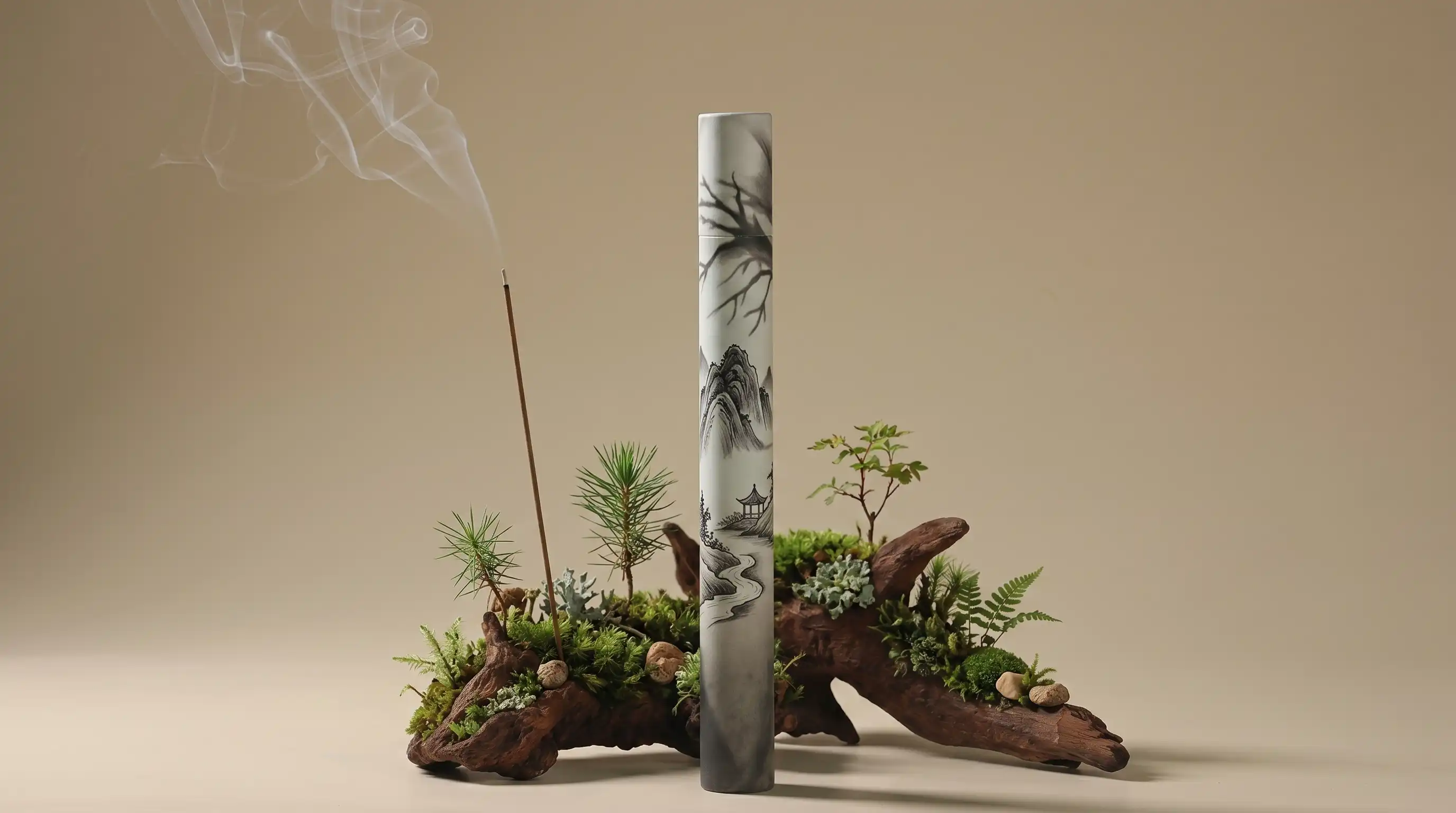
In the earliest days, people burned grass and wood to worship heaven and earth. Later, they shaped incense into slender sticks, hoping their thoughts would drift farther—to the gods above, to those far away, and to ancestors long gone. When incense burns, its smoke rises, but its fragrance settles deep in the heart.
These words have been passed down for generations in old incense shops in southern Fujian. In just a few sentences lies the very essence of Chinese stick incense culture.
It is never merely the burning of spices. It is a unique Chinese “vessel of intention.” From the ritual fires of three thousand years ago to the wisp of smoke on today’s desks, the evolution of stick incense holds all our gentle devotion—to heaven and earth, to departed loved ones, and to ourselves.
The story of Chinese incense begins in the Neolithic Age with the ancient ritual of fanchai—burning wood to worship heaven.
Ancient people burned cypress and orchid grass, believing the rising fragrance could “reach the ears of heaven,” serving as the only bridge between mortals and the divine.
Back then, incense had no form, only burning plants. Intentions were simple and fleeting—when the fire died and smoke faded, the conversation felt over. It took nearly 2,000 years to evolve from burning loose plants to incense pellets, patterned incense, and finally stick incense.
This was not a limit of craftsmanship, but a shift in how we valued intention. We no longer wanted our thoughts to vanish in a single flame. We wanted them to last longer, drift farther, and remain longer.
Stick incense first appeared in written records during the late Song and early Yuan dynasties, in the book Records of the Capital.
Artisans ground agarwood, sandalwood, and other fragrant materials into fine powder, mixed it with nanmu adhesive to form a paste, pressed it into thread-thin sticks, and dried them for burning.
This seemingly simple change in form completely transformed the meaning of incense:
It was no longer fleeting fire, but an extended “thread of intention.” One stick burns steadily for about an hour, sending smoke upward nonstop, carrying intentions continuously.
It is no longer disturbed by wind or uneven flames. Even in the breeze, it burns straight and steady—just like our sincere intentions, unshaken by the outside world.
As smoke rises, the fragrance gently descends, touching our noses and settling in our hearts.
This is the unique tenderness of stick incense: as it carries our thoughts outward, it also calms our inner selves.
Scholars light incense while reading not to worship gods, but to soothe a restless mind—smoke moves, yet the heart grows still.
Those with insomnia burn cypress incense; its scent wraps around them like drowsiness, and daily worries drift away with the smoke.
Even on an ordinary evening, lighting incense by the window lets the fragrance settle in the heart, making life feel calm and complete.
It honors heaven and earth outwardly, and comforts the soul inwardly. With one stick of incense, the Chinese achieve the two most important things: living in harmony with the world, and living in peace with oneself.